Ozempic Butt: What It Is, Why It Happens, and What You Can Actually Do About It
- Fit with Frank
- Jun 23
- 2 min read
They say every day is a learning day, and for me the phrase "Ozempic butt" is new one - and something I found out about through a BBC News article sent to me by my podcast co-host Katie Bulmer-Cooke.

What is "Ozempic butt"?
It basically describes what happens to people's backsides when they lose weight rapidly through GLP-1 weight loss medication like Ozempic or Mounjaro. This muscle loss can apply to various body parts, but in this instance we're talking specifically about the gluteus maximus — aka the booty, aka the largest muscle in your body.
Glutes are responsible for:
Keeping you upright and stable
Powering you up stairs, hills, and out of chairs
Protecting your lower back, hips, and knees
Looking bootyful in your bikini/speedos/jeans etc 😉🍑
What is this new drug that can help 'Stop Ozempic Butt'?
A new drug called 'Apitegromab' is currently in clinical trials that, when taken alongside GLP-1 medication, helped people retain around 55% more lean muscle mass than those who didn't take it.
Fascinating stuff.
But here's where I have to be straight with you, because this is important:
This drug doesn't build muscle. It just slows down how much you lose.
Meaning, if you don't have muscles already, then you're not gonna magically grow stronger ones, and at best, you can maintain half of what you have, which if nothing, is still nothing...
Here's the thing most people don't realise...
For a huge number of people, whether they're on weight loss medication or not — the glutes are already underdeveloped before any drug enters the picture.
Why?
Modern life. We sit. A lot. Desk jobs, long commutes, evenings on the sofa. Your glutes spend most of the day switched off, barely firing, quietly forgetting what they're supposed to do. By the time most people start a weight loss journey, their backside is already playing catch-up, so when you add rapid weight loss into the mix, and you can see why this becomes a real issue.
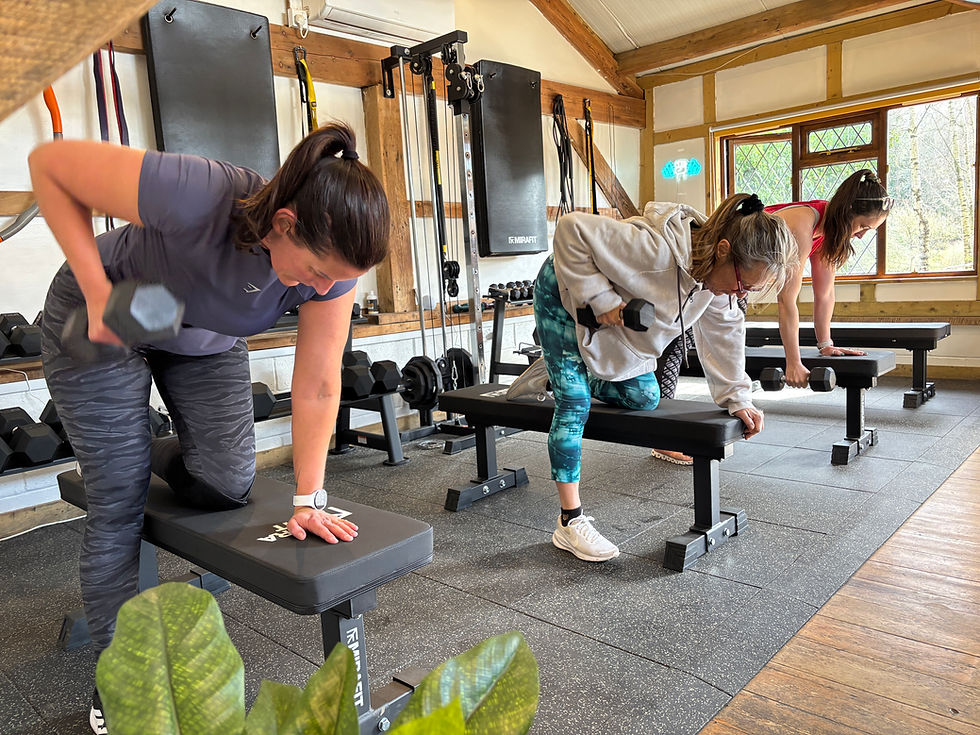
What actually works to grow muscle:
Strength train 2–3 times a week: 10 minutes at home, or go full hog at a gym
Focus on the big moves: squats, lunges, hip thrusts, deadlifts
Stay consistent — an imperfect programme you stick to beats a perfect one you don't
Need help getting started?
The bottom line (couldn't resist)
New drugs will keep coming. There'll probably be one for arms next, then the face, then something else, but the fundamentals haven't changed and they won't.
Move.
Lift.
Eat enough protein.
And if you're on a weight loss journey of any kind, let's make sure the body you're building is strong, functional, and built to last.
Katie and I talked all about this on this week's Voice of Fitness Reason podcast — give it a listen above. And if you've got questions about training alongside GLP-1 medication, drop me a message. It's literally what I'm training to specialise in.
_____________
Frank Sinclair is an award-winning personal trainer based at Priory Farm Estate, Surrey, and is currently training to become a GLP-1 certified personal trainer.